

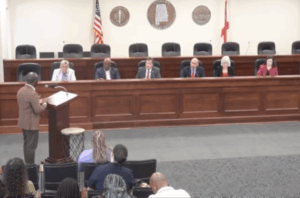
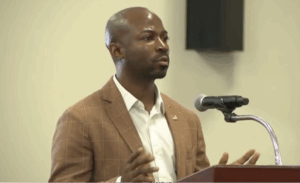
This summer, I stood before the joint legislative prison committee at the Alabama State House, a platform that allowed me to voice my deeply personal experience of false arrest and the subsequent torture I endured at the hands of the Michigan State Police. My story is not singular; it echoes the harrowing realities faced by countless individuals entangled in a flawed criminal justice system. As I shared my journey, I couldn’t help but draw parallels to the growing concern surrounding Alabama’s new legislation, particularly bills like HB 202, which seemingly aim to bolster law enforcement qualified immunity at the expense of accountability and justice.
The alarming trend in our state is one that prioritizes the interests of law enforcement over the very citizens it is meant to protect. It’s a dangerous game, and one that could lead Alabama down a path toward a failed criminal justice system, further alienating communities and perpetuating cycles of violence and mistrust. As I embarked on my campaign for US Senate for Alabama and a 67-county listening tour, my mission was clear: to gather insights and devise legislation that would not only improve the lives of all Alabamians but also address the systemic issues impacting those affected by incarceration.
My recent viewing of the Alabama Solution documentary on HBO Max served as a stark reminder of the urgent need for reform. It paints a vivid picture of the struggles faced by families caught in the crosshairs of a punitive system that often fails to rehabilitate and instead perpetuates cycles of despair. Connecting with families at the hearing, meeting with Alabama Appleseed, I was horrified to hear their stories—tales of lost loved ones, inadequate mental health support, and a system that seems more focused on punishment than on healing and restoration.
In 2024, a staggering 277 people died in Alabama’s prisons, a tragic statistic that underscores the urgent need for reform. Since 2020, Alabama has spent $57 million defending corrections against officers against lawsuits, a misuse of funds that should instead be directed toward improving conditions and supporting rehabilitation efforts. This financial mismanagement, coupled with the fact that Black people make up over half of the prison population despite being only 26% of the state’s population, points to a legal system that systematically results in longer sentences for Black men and perpetuates racial disparities.
In light of these experiences, I am compelled to propose a six-point legislative plan aimed at aligning Alabama with Department of Justice (DOJ) guidelines. This initiative is not merely a reaction to the current climate but a proactive step toward transforming our prisons from facilities of despair into genuine correctional institutions that promote rehabilitation and reintegration into society. Alabama’s prisons should be places of reform, not death camps.
1. Enhanced Oversight and Accountability
The first pillar of my plan calls for the establishment of an independent, publicly staffed oversight committee to monitor prison conditions and ensure compliance with DOJ standards. This body would be empowered to investigate claims of abuse, misconduct, and constitutional violations within our correctional facilities. By fostering transparency and accountability, we can begin to dismantle the culture of impunity that has long plagued our prison system.
2. Comprehensive Drug Treatment Programs
A significant portion of our prison population grapples with substance abuse issues. To address this, my plan includes the implementation of comprehensive drug treatment programs within correctional facilities. These programs would focus on providing evidence-based treatment and support for individuals struggling with addiction, thus facilitating recovery and reducing recidivism rates. Access to such resources is crucial in breaking the cycle of addiction and incarceration, as I know well as a former board member of the National Harm Reduction Coalition.
3. Procedures to Prevent Drug Introduction
In conjunction with drug treatment programs, it is essential to establish stringent procedures to prevent the introduction of drugs into our correctional facilities. This would include enhanced security measures, such as thorough searches of inmates and visitors, improved surveillance technologies, and ongoing staff training to recognize and respond to drug-related issues. By creating a drug-free environment, we can foster a safer atmosphere conducive to rehabilitation.
4. Education and Vocational Training
Education and vocational training are critical components of successful rehabilitation. My plan advocates for the expansion of educational programs and vocational training opportunities within Alabama’s prisons. By equipping inmates with valuable skills and knowledge, we can empower them to lead productive lives upon release, thus breaking the cycle of incarceration.
5. Community Reintegration Programs
Reintegration into society can be a daunting challenge for those exiting the prison system. To facilitate this transition, we must develop robust community reintegration programs that provide support, mentorship, and resources for formerly incarcerated individuals. By fostering connections with local organizations, we can help them secure housing, employment, and social support, ultimately reducing the likelihood of reoffending. Furthermore we must review and take action on our plummeting parole rates.
6. Legislative Review and Reform
Lastly, it is crucial to conduct a comprehensive review of existing laws and policies that disproportionately impact marginalized communities. We must work toward reforming mandatory minimum sentencing laws, eliminating cash bail practices, and addressing racial disparities within our criminal justice system. These changes are essential to creating a fair and equitable legal framework that prioritizes justice over punishment.
In light of these proposed reforms, I must address the feckless actions of Alabama Attorney General Steve Marshall, a Republican Senate candidate. His approach to the ongoing issues within our criminal justice system has often seemed more focused on placating law enforcement than advocating for the rights and dignity of Alabamians. While he may tout the importance of public safety, his lack of action on critical reforms reveals a troubling disconnect from the realities faced by vulnerable communities.
Marshall’s reluctance to confront the systemic issues plaguing our prisons speaks volumes. Instead of championing accountability and transparency, he appears content to maintain the status quo—one that thrives on the very chaos and discontent he claims to want to eliminate. If he truly seeks to protect Alabamians, he must take responsibility for the failures within our justice system, rather than deflecting blame onto others.
As we approach the upcoming elections, it’s imperative that we support Democratic Senate candidates in Alabama who are committed to addressing these issues head-on. We need leaders who understand the complexities of our justice system and who will advocate for reforms that uplift marginalized communities, including Black Alabama Senate candidates like myself who represent the voices often left unheard. These leaders can bring fresh perspectives and a commitment to social justice that is sorely needed in our state.
With each day that passes without meaningful action, we see the consequences of Marshall’s inaction. The families who have suffered under a broken system deserve better than empty promises and political grandstanding. It is time for our leaders, including Attorney General Marshall, to step up and prioritize the well-being of all citizens, particularly those who have been victimized by a broken system.
The time for action is now. Alabama stands at a crossroads, faced with an opportunity to redefine its approach to criminal justice. By prioritizing accountability, rehabilitation, and community support, we can build a system that reflects our values and aspirations as a state. It is time to step away from punitive measures and embrace a vision of justice that uplifts rather than oppresses.
In conclusion
let us not allow Alabama’s prisons to remain as death camps; instead, let us transform them into facilities of hope and redemption. By implementing these reforms, we can create a criminal justice system that serves the best interests of all Alabamians, promoting healing, restoration, and true justice. It is high time for Attorney General Steve Marshall to align his actions with the urgent needs of our communities and take a stand for real change, lest he be remembered as a candidate more concerned with his political aspirations than with the lives of the people he is sworn to protect.